AEC London
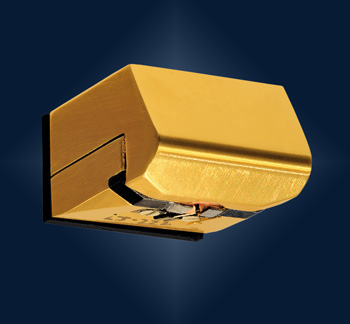
The AEC London series of cartridges is the direct successor to the cartridges designed by engineers at DECCA, one of the oldest record labels. The origins of Decca’s cartridges date back to the 1950s. It was then, in 1951, that the first mono cartridges appeared, followed by stereo cartridges in 1958. Over the years, the cartridges evolved, but in 1989, the Decca division responsible for their production was shut down, and the world would likely have forgotten about them had it not been for John Wright, a former Decca engineer, who purchased the licenses and began production on his own.
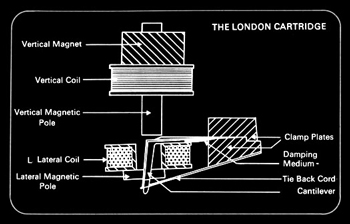
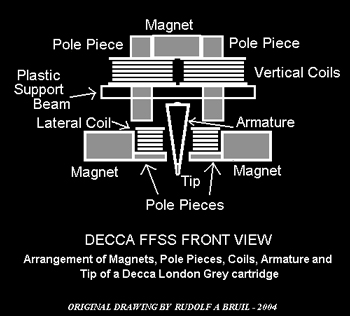
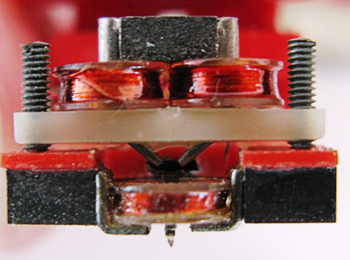
Cartridges with a “moving iron” design do not have a traditional cantilever to which a “diamond” is glued on one end and suspended (via a flexible damper) from the cartridge’s yoke on the other. According to the designers, it was precisely this “suspension” that posed a problem because it dampened some of the vibrations that should have been converted into a signal. In AEC London cartridge designs, there is no traditional support point; instead, the stylus (diamond) and a very short cantilever are attached to a magnetized foil several microns thick that passes through the center of the coil. The other two coils are located above the entire assembly. The vibrations generated by the stylus moving across the record are converted directly into a signal. The creators of this cartridge have named this method of reading “positive scanning.” All of this allows you to enjoy music with exceptional tonal quality, excellent precision, and detail—a rich, textured sound. AEC London cartridges have slightly different model designations. There are the C-91, Jubile, and Reference series.