Air Force One
AIR FORCE ONE
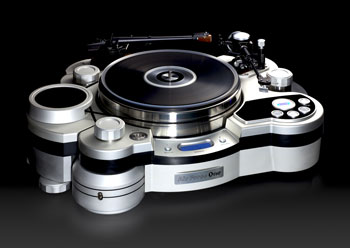
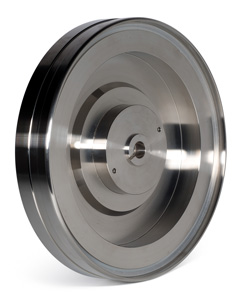
Air Force One is a marriage of classic attention to detail and a passion for playing vinyl records with modern technological solutions. The resulting device is thoroughly Japanese in its precision and world-class in its sound. This turntable is considered one of the most outstanding achievements in its field—and there is not a shred of exaggeration in that statement. Air Force One is the work of the team behind the legendary Micro Seiki brand, led by renowned designer Hideaki Nishikawa. Now, under the new TechDAS brand (part of Stella Inc.), they are bringing their latest ideas and dreams to life, continually pushing the boundaries of what is possible in turntables.
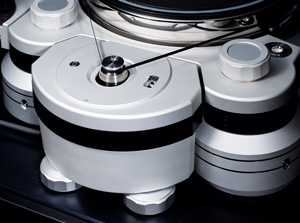
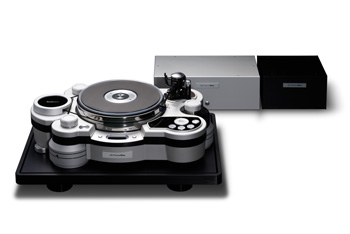
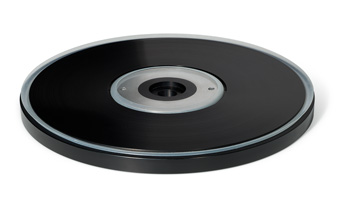
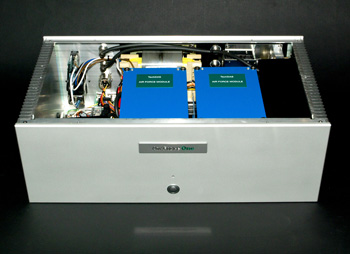
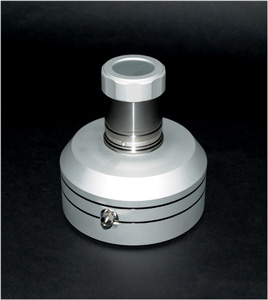
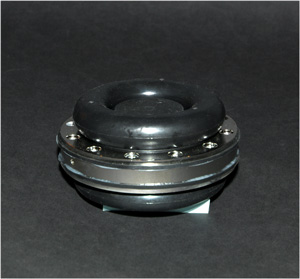
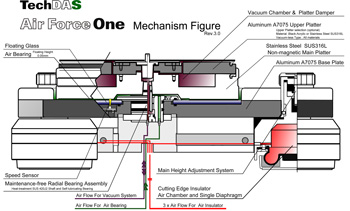
The central concept behind TechDAS’s first turntable is the use of air to improve performance. The Micro Seiki models already featured a system that uses negative pressure to hold the record in place on the platter, a feature also present in the Air Force One. Here, however, this concept has been taken much further. Put simply, the turntable’s job is to ensure the record rotates stably so that the cartridge on the tonearm can read the information on it. Reality, however, puts this seemingly straightforward process to a very harsh test. Friction, vibrations, surface irregularities, and unwanted movements originating from the turntable itself, the records, or even the room are just a few of the many obstacles turntable designers face. Air Force One is an attempt not to fight these problems, but to eliminate them at their root. You won’t find a “traditional” bearing in the Air Force One—this component has been replaced by impressive air-bearing technology. When at rest, the platter rests on a smooth, polished glass plate. As soon as the turntable is turned on, air is supplied to it, lifting the platter to a height of 0.05 mm.With this technology, however, even a small height is fully sufficient. It ensures smooth movement of the platter, free of the friction, vibration, and wear associated with bearings. The air bearing also allows for maximum utilization of the platter’s inertia. However, for this force to take effect, the platter must be a heavy, well-balanced object. The two-piece platter used in Air Force One fulfills this function and offers much, much more. The lower part of the platter is made of 19 kilograms of non-magnetic SUS316L stainless steel. This material is first heat-treated in a forge to increase its hardness. It is then machined on a precision lathe to ensure a surface completely devoid of magnetic properties. The lower section is then polished to ensure smooth airflow within the air bearing. This part of the platter also contains a chamber that holds 1.1 liters of air. As part of the system that secures the disc to the platter, this impressive volume of air is used to prevent resonance between the lower and upper sections of the platter. The top platter is interchangeable, and three different options are available: SUS316L stainless steel (as in the bottom part of the platter), A7075 aerospace-grade aluminum, and black methyl methacrylate. Each of these options provides different sonic effects, enhancing the turntable’s customization potential. The Air Force One platter uses negative pressure—which means it can “hold” the record in place on its surface using air. This feature is particularly useful when playing records with minor surface imperfections. The gentle suction does not damage the record but evens out its surface. This helps reduce vibrations in the low frequencies when playing uneven records. It also reduces resonance between the record and the top of the platter. The Air Force One motor is independent of the turntable’s chassis. To ensure stable drive of the nearly 30-kilogram platter, an AC synchronous motor is used here. Rotational stability is monitored by a non-contact sensor, which immediately corrects any deviations. To get a platter of this mass moving, the motor operates at full power during the initial stages of operation. Once the correct speed is reached, the motor’s output is reduced. Thanks to the virtually frictionless air bearing and the platter’s weight, rotational stability is achieved through the platter’s inertia. The motor’s role at this point is merely to stabilize the existing rotation. Limiting its operation ensures quiet and precise operation. The current revolutions per minute are shown on the display and can be freely adjusted by the user with an accuracy of ±0.1 rpm. Power from the motor is transmitted to the platter via a special, non-stretch 4-mm-wide belt. Conventional, stretchy belts caused wobble and sound distortion. That’s why Air Force One features a belt made of polished polyurethane, which ensures greater stability. The chassis is constructed from three layers of aluminum, weighing a total of 43 kg. The lower part of the chassis is made of A5052 aluminum, providing exceptional rigidity and a smooth, impressive finish. An even harder material—A7075 aerospace-grade aluminum—is used in the middle section of the structure. It is firmly held between the two outer layers, minimizing resonance between the top and bottom of the turntable. The top layer is made of A5052 aluminum, which has been additionally anodized. Like the material used in the base, it is sturdy and has an exceptionally modern look. This impressive design rests on three adjustable feet with air suspension, which reduce unwanted vibrations. Up to two tonearms can be mounted on the Air Force One. One 9- or 10-inch tonearm can be mounted on the standard tonearm base. The combination of ebony and A7075 aluminum—used in other parts of the turntable—ensures high rigidity and a stable mount within the chassis. The second tonearm base is optional and can be mounted on the rear left side of the turntable. This additional base allows for the installation of 10- or 12-inch tonearms. In addition to the turntable and motor, the unit houses a power supply, an air pump, and filters and dehumidifiers—all essential for proper operation—in their own enclosures.
Air Force One is a device born out of a love for faithful music reproduction. Its flawless sound will unlock the purest form of music from your records, allowing you to enjoy it to the fullest.

Specifications
| Parameter | Value |
|---|---|
| Drive System | Belt Drive, Surface polished polyurethane fiber flat belt |
| Platter | Main platter: SUS316L Forged and non-magnetism processed. Weight 19 kg Upper platter: A7075 (3.5 kg), SUS316L (10 kg), Methacrylate (1.5 kg) |
| Motor | AC synchronous motor. Rotating speed controlled by DC amplifier. Motor weight 6.6 kg |
| Chassis | Three different material sandwiched structure. Chassis weight 43kg |
| Rotation Speed | 33 1/3 rpm, 45 rpm Precise speed adjustment function. |
| Wow & Flutter | below 0.03% (W.R.M.S) |
| Minimum Dimensions for setting up | 680 (W) x 480 (D) mm |
| Total Weight | 79 kg |
| Power Supply Unit | Power consumption: 60W Dimension and weight: 430(W) x 150(H) x 240(D) mm, 10kg Operation voltage: 100 / 120 / 220 / 240 V (50 / 60 Hz) |
| Air Condenser Unit | Dimension: 260 (W) x 160 (H) x 240 (D) mm 4kg |
| Accessories Supplied | Tonearm Base Board x 1 (drilled for specified tonearm) AC Cable x 1 |
| Optional Items & Accessories | Second Tonearm Base Board Tonearm Base Board for supplement (for 1st and/or 2nd tonearms) Upper Platter for supplement (A7075/SUS31Methacrylate) |